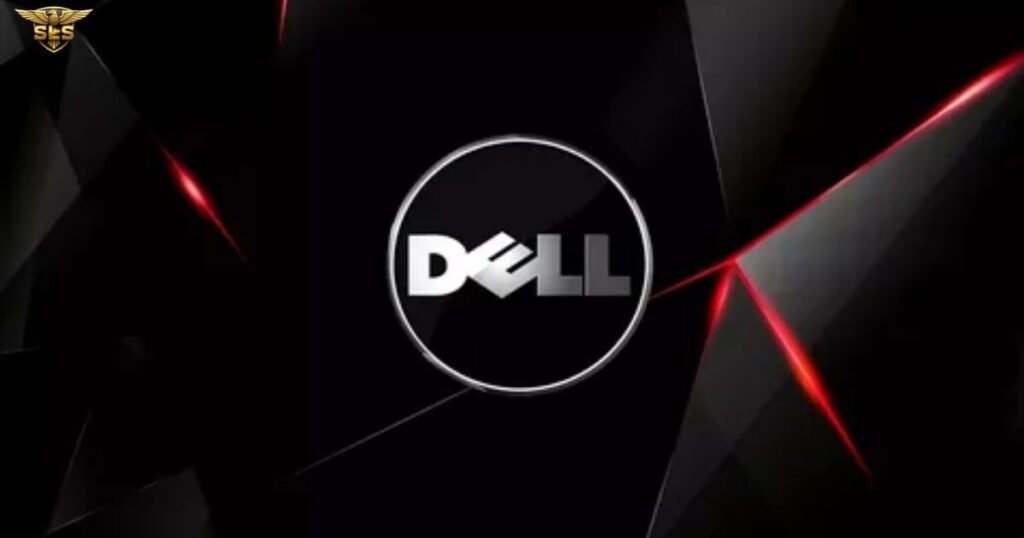
When you see a blue circle with a slanted ‘E’, you immediately think of computers. The Dell logo is one of the most recognizable icons in the technology world. It adorns millions of laptops, monitors, and servers globally. But this simple design holds a deeper story. It is a tale of a college student’s ambition, a desire to change the world, and a visual identity that evolved from a simple text to a symbol of global innovation.
Understanding the Dell logo requires looking at where the company started. It wasn’t always the polished blue icon we see today. The journey from PC’s Limited to Dell Technologies offers a masterclass in brand identity and corporate identity.
The Meaning Behind the Dell Logo
Great logos communicate a feeling without using many words. The current Dell emblem combines geometry, color, and typography to send a specific message.
The design relies heavily on the psychological impact of geometric shapes. The circle symbol surrounding the text represents the world. It signifies global presence, evolution, and unity. It tells the customer that Dell is an all-encompassing solution for their tech needs.
Inside the circle, the text remains the hero. The most famous element is the tilted ‘E’. This isn’t a printing error. It is a deliberate design choice that represents the company’s desire to be different. It symbolizes innovation and the disruption of traditional business models.
The colors play a massive role as well. The signature Dell Blue is not random. In color psychology, blue evokes trust, loyalty, wisdom, and confidence. It is a calming color that suggests the technology is reliable. When paired with white, which stands for simplicity and purity, the logo promises a user-friendly experience.
A Journey Through Time: Dell Logo Evolution
The history of the Dell logo mirrors the growth of the personal computer industry. From a dorm room in Austin, Texas, to a multinational corporation, the visual identity has matured alongside the technology.
1984: The Humble Beginnings (PC’s Limited)
Before the world knew the name “Dell,” Michael Dell founded the company as PC’s Limited in 1984. The branding at this stage was strictly functional. The logo did not feature the famous name we know today.
Instead, the PC’s Limited logo used a stark black-and-white design. The font was a jagged, pixelated serif style that mimicked the aesthetic of early computing. The standout feature was a microcircuit icon. This highlighted the nature of the business: building computers.
While this design established safety and security, it lacked personality. It was a product of its time—utilitarian and focused on the hardware rather than the brand experience.
1987: The First “Dell” Identity
By 1987, the company was growing fast. Michael Dell rebranded the company to Dell Computer Corporation. With the new name came the first true Dell logo.
This version moved away from the pixelated look. It featured the word “Dell” in a bold, serif font. Vertical blue lines were added above and below the text. These lines symbolized barriers or protection, giving the logo a sturdy and grounded feel. This was the first introduction of the blue color palette, signaling a shift toward trust and confidence.
1989-2010: The “Turned Ear” Era Begins
This is the era where the brand truly found its voice. In 1989, the company hired the renowned branding firm Siegel+Gale. The designers wanted to create something that visually represented Michael Dell’s unique approach to business.
The result was the iconic “Dell” wordmark with the tilted ‘E’. The slanted letter was a direct visual translation of Michael Dell’s axiom: “Turn the world on its ear.” He wanted to sell computers directly to consumers, bypassing the middleman—a revolutionary idea at the time.
The logo used a dark blue color. It was solid, bold, and highly readable. This specific design became synonymous with the explosion of the home computer market in the 1990s. If you bought a desktop in the 90s, this is the badge that was on the tower.
2010-2016: The Circle of Evolution
In 2010, Dell needed a refresh. The company had expanded beyond just selling PCs. They were acquiring companies like Alienware and moving into enterprise services.
The 2010 update introduced the ring. The “Dell” text, still featuring the slanted ‘E’, was placed inside a blue circle. The font was tweaked slightly to be more compact, and the “E” became slightly squarer.
This circle symbol represented the company’s global presence and the protection of its customers’ data. It aligned with the new slogan at the time, “The power to do more.” The blue became brighter, feeling more energetic and modern.
2016-Present: Modern Refinement (Dell Technologies)
Following the massive merger with EMC Corporation, the parent company became Dell Technologies. The logo received another update to reflect this massive scale.
The 2016 version is a refined, thinner iteration of the 2010 logo. The stroke weights of the circle and the letters were reduced, making the logo look lighter and more elegant. It feels less industrial and more digital.
This version uses a custom typeface often associated with Dell Replica or Roboto font styles in their broader branding. It allows the logo to be scalable, meaning it looks just as good on a tiny smartphone screen as it does on a giant billboard.
For a detailed visual archive of these changes, resources like Fandom provide excellent chronological galleries.
Comparison of Dell Logo Versions
To understand how the brand has shifted over the last four decades, here is a breakdown of the key elements across the major eras.
| Year | Company Name | Key Design Elements |
Meaning |
|---|---|---|---|
| 1984 | PC’s Limited | Black & white, pixelated serif font, microcircuit icon. | Safety, security, technical capability. |
| 1987 | Dell Computer Corp | Serif font, blue horizontal lines. | Confidence, stability, introduction of blue. |
| 1989 | Dell | Bold serif font, solid blue text, tilted ‘E’. | “Turning the world on its ear,” disruption, uniqueness. |
| 2010 | Dell Inc. | Text inside a blue ring, brighter blue. | Global presence, evolution, protection. |
| 2016 | Dell Technologies | Thinner strokes, lighter weight, minimalist design. | Elegance, digital transformation, scalability. |
The “Slanted E”: Turning the World on Its Ear
The most common question people ask regarding the Dell logo is, “Why is the E crooked?”
It wasn’t a mistake by the designers at Siegel+Gale. It creates a memorable hook. In the world of logo design, being memorable is the ultimate goal. If the text were perfectly straight, it would look like any other corporate wordmark. The tilt adds dynamism.
There is a relatable anecdote about this design choice. Michael Dell was a disruptor. He didn’t want to follow the rules of IBM or Compaq. When the design team presented ideas, the concept of “turning the world on its ear” resonated with him. It captured the spirit of a startup that grew into a giant.
According to design analysis from Logosdesign, this single slanted letter transforms the logo from a static image into a narrative about innovation.
Color Palette and Typography
The visual language of Dell relies on a strict set of codes. These ensure that whether you are buying an Inspiron, Latitude, XPS, or Precision machine, the branding feels consistent.
The Colors
- Dell Blue: This is the core of the brand. It isn’t just “blue.” It is a specific shade meant to convey intelligence. Blue represents the cool logic of computing. It also signifies wisdom and loyalty, assuring enterprise clients that Dell is a partner for the long haul.
- White: Used for the background or the text inside the blue circle. White is the color of simplicity. It provides contrast, ensuring the logo is legible.
- Black: Occasionally used in text or backgrounds (especially in the Dell Technologies variations). Black adds power, authority, and elegance.
The Fonts
The typography of Dell has evolved from standard serifs to custom geometric sans-serifs.
- Original Serif (1989): A heavy, modified serif font that looked authoritative.
- Museo: For many years, Dell used the Museo font in its marketing materials. It is a semi-slab serif that is friendly yet technical.
- Roboto and Dell Replica: In the modern era, specifically after the 2016 rebrand, the company utilizes fonts like Roboto for digital interfaces due to their readability. The logo itself uses a custom typeface often referred to as Dell Replica, which is cleaner and lighter than the 1989 version.
Branding Beyond the Logo: Slogans and Identity
A logo does not exist in a vacuum. It is supported by corporate slogans that drive home the message.
- “Easy As Dell”: This played on the ease of ordering a custom PC over the phone or online.
- “Yours is here”: This emphasized customization. It told the user that this computer was built specifically for them.
- “The power to do more”: Introduced around the 2010 logo update, this slogan shifted focus from the hardware to what the customer could achieve with the hardware.
These slogans work in tandem with the visual identity. The “Power to do more” era coincided with the introduction of the circle logo, reinforcing the idea of a complete, global solution.
For a deeper look at how these slogans integrated with the designs, logomyway.com offers a concise breakdown of the company history and marketing language.
How to Recognize Genuine Dell Branding
Because the Dell logo is so popular, it is often counterfeited. Here is a simple guide to identifying the genuine modern aesthetic versus older or fake versions.
Step 1: Check the “E”. The “E” must be tilted downwards. In the modern logo, the angle is precise. If the “E” is straight, it is not the official logo.
Step 2: Inspect the Circle Weight. In the current (post-2016) logo, the ring surrounding the text is relatively thin. If you see a very thick, heavy blue ring, you are likely looking at the 2010-2015 era logo, or a poor reproduction.
Step 3: Analyze the Color. The official Dell Blue is vibrant but not neon. It should look professional. Fakes often use a purple-ish blue or a shade that is too dark.
Step 4: Look for “Technologies” On corporate documentation and enterprise hardware, the logo often reads “Dell Technologies.” On consumer laptops (like the XPS or Inspiron), it will usually just be the circle icon with “Dell” inside.
The Legacy of the Design
The Dell logo is a testament to the power of minimalist design. It doesn’t need a mascot or complex graphics. It relies on a single geometric twist—the tilted ‘E’—to tell its story.
From the pixelated microchips of PC’s Limited to the sleek, thin lines of the modern era, the logo has adapted to the times without losing its core identity. It represents a company that started in Austin, Texas, with a few parts and grew into a global infrastructure giant.
The logo proves that consistency is key. By keeping the slanted ‘E’ for over 30 years, Dell has built a visual asset that is recognized instantly across the globe. It stands for safety, evolution, and the power to change the world.
Frequently Asked Questions (FAQ)
What is the meaning behind the Dell logo?
The Dell logo symbolizes the company’s innovative spirit. The circle represents the world and Dell’s global presence. The blue color signifies trust and reliability, while the tilted ‘E’ represents Michael Dell’s desire to “turn the world on its ear” with his unique business model.
Why is the ‘E’ tilted in the Dell logo?
The tilted ‘E’ was designed by Siegel+Gale in 1989. It is a visual representation of founder Michael Dell’s wish to turn the computer industry on its ear. It creates a unique, memorable focal point in the wordmark that differentiates it from competitors.
Who designed the Dell logo?
The iconic version of the logo with the slanted ‘E’ was designed by the branding firm Siegel+Gale in 1989. Later updates in 2010 and 2016 were refinements of this original concept, with involvement from agencies like Lippincott for the 2010 brand refresh.
What are the different versions of the Dell logo over time?
- 1984: PC’s Limited (Black and white text with microcircuit).
- 1987: Dell Computer Corp (Serif text with blue lines).
- 1989: The classic “Dell” with the tilted ‘E’.
- 2010: The “Dell” text inside a blue circle.
- 2016: A thinner, more refined version of the circle logo for Dell Technologies.
What colors are used in the Dell logo and what do they mean?
The primary colors are Blue, White, and sometimes Black.
- Blue: Represents trust, loyalty, wisdom, and confidence.
- White: Represents simplicity and clarity.
- Black: Represents power, elegance, and authority.
When did Dell change its logo?
Dell has had major logo changes in 1987, 1989, 2010, and 2016. The 1989 change introduced the slanted ‘E’, and the 2016 change modernized the logo following the EMC merger.
What fonts are used in the Dell logo and Dell branding?
The logo itself uses a custom typeface, often called Dell Replica or simply a modified geometric sans-serif. For marketing and digital interfaces, Dell uses the Museo font and Roboto font families to ensure readability and a modern look.
What does the circle in the Dell logo represent?
The circle, added in 2010, represents the globe and Dell’s worldwide reach. It also symbolizes evolution, continuity, and the company’s ability to provide end-to-end solutions for customers.
What was Dell’s original company name and logo?
The original company name was PC’s Limited. The logo was a black-and-white design featuring a pixelated serif font and a linear representation of a computer microcircuit icon.
How has the Dell logo evolved since 1984?
It evolved from a complex, industrial design (microcircuit) to a simplified, abstract wordmark. The evolution moved from emphasizing what they sell (computer parts) to who they are (a trusted, global brand), culminating in the minimalist design we see today.
What is the current Dell Technologies logo?
The current logo features the word “Dell” in a lightweight sans-serif font with the iconic tilted ‘E’, enclosed in a thin blue circle. The text “Technologies” is often placed underneath or beside the icon in a simple, non-bold sans-serif font.